RAINWATER HARVESTING

rain water harvesting


WHAT IS RAINWATER HARVESTING?

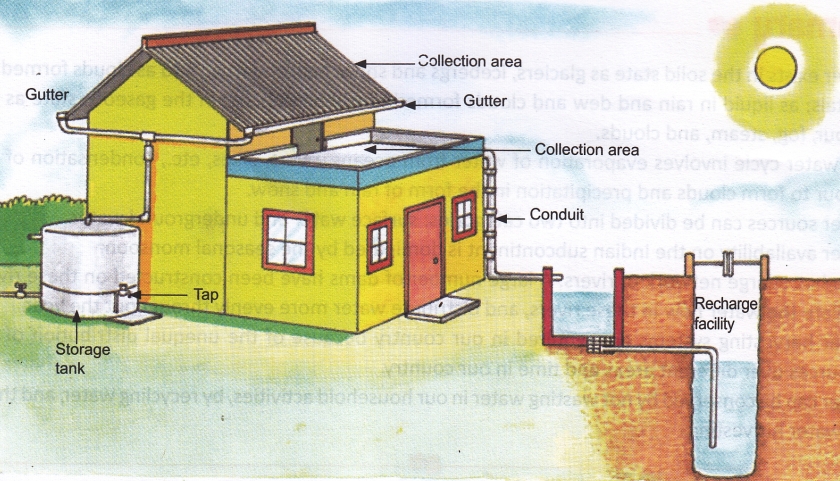
Rain water harvesting (RWH) is a technique of collection and storage of rainwater into natural reservoirs or tanks, or the infiltration of surface water into subsurface aquifers (before it is lost as surface runoff). One method of rainwater harvesting is rooftop harvesting. With rooftop harvesting, most any surface — tiles, metal sheets, plastics, but not grass or palm leaf — can be used to intercept the flow of rainwater and provide a household with high-quality drinking water and year-round storage. 

Rainwater harvesting is an innovative alternative water supply approach anyone can use. RWH captures, diverts, and stores rainwater for later use.

Implementing rainwater harvesting is beneficial because it reduces demand on existing water supply, and reduces run-off, erosion, and contamination of surface water.

Rainwater can be used for nearly any purpose that requires water. These include stormwater control, rain gardens, landscape use, in-home use, agricultural use, industrial use and fire protection etc. 

Why rainwater harvesting?

In areas where water supply is problematic or water resources are scarce, rain harvesting is a good solution. It reduces the dependency on groundwater for uses such as landscaping, toilet flushing, laundry etc, easing the pressure on well, bore hole, public water systems; and reduces stormwater runoff peak flow and volume.

Rainwater harvesting can provide clean water-supply for a small community. Especially when pipelines are too expensive to set up and one central well or pump cannot be used all around the year, a rainwater catchment system is a workable solution. By collecting and using rainwater, you can also be assured that you have some of the cleanest, healthiest water available, as it will not have been treated with chemicals as the water that comes from your taps will have been.

Some advantages of rain harvesting:

  • Easily accessible
  • Set-up costs are low, with easy construction and  low-cost materials
  • Easy maintenance at household level
  • Sustainability is higher
  • Easily adaptable to different types of communities
  • Promotes both water and energy conservation
  • Reduce erosion and flooding

Rainwater harvesting Components

All rainwater harvesting systems (RWHS) have basics components, which include a catchment/collection surface, conveyance system, storage, distribution, and treatment. A RWHS can range in size and complexity. For more information on each, please see the menu on the right titled “RWH Components.”

RWH COMPONENTS 

  • Catchment/Collection Surface
  • Conveyance System
  • Storage
  • Distribution
  • Treatment


storm water (rainwater) management

STORM WATER (RAINWATER) MANAGEMENT


Storm water (rainwater) is water that comes from precipitation and ice/snow melt – it either soaks into exposed soil or remains on top of impervious surfaces, like pavement or rooftops. Stormwater will eventually evaporate off of a level surface, but most often it flows as runoff to another location.

Storm water (rainwater) runoff is any water running off a land surface before it reaches a natural water body. It occurs when the rate of precipitation is greater than it can infiltrate, or soak, into the soil. Runoff also occurs when the soil is saturated. Runoff remains on the surface and flows into streams, rivers, and eventually large bodies such as lakes or the ocean.

Movement of this storm water(rainwater) across the soil causes erosion. It can also carry and deposit untreated pollutants, such as sediment, nutrients and pesticides, into surface-water bodies.

Impervious surfaces such as driveways, sidewalks, parking lots and streets block rainfall and other precipitation from infiltrating naturally into the ground, leading to even more stormwater and potential pollutant runoff.

Most of the world water problems such as flooding, drought, water pollution, water shortage are all related to rainwater. Due to climate change and urbanization, water  problems are increasing throughout the world in both developing and developed countries. By proper rainwater management, we can reduce the risk of such problems and enhance the resilience.

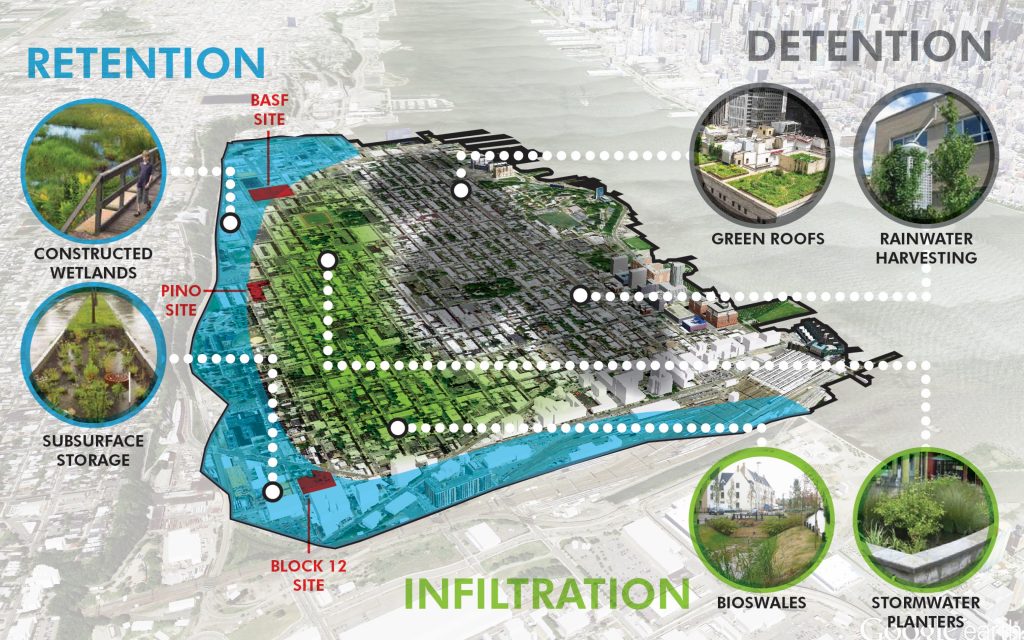
Storm water (Rainwater) management solutions are techniques used to reduce rainwater runoff from causing damages, flooding and dispersing pollutants. Stormwater management involves detaining, retaining, or providing a discharge point for rainwater to be reused or infiltrated into the groundwater

One of the solutions designed to manage storm water (rainwater) is Rainwater Harvesting. Rainwater Harvesting (RWH) offers a small-scale best management practice to reduce stormwater runoff and the problems associated with it. By harvesting the rainfall and storing it for later use or direct groundwater recharge, water is slowly released back into the soil and then moves into groundwater table, providing a steady supply of water to local streams and river. 

Rainwater harvesting can be used to achieve a source control of rainwater, as it significantly reduces the peak flow and volume of rainwater runoff. 

Collecting and Using rainwater strengthens the hydrological  cycle, reduces storm water runoff and limit the demand for water from well, lakes, reservoirs and rivers. It’s a self-sufficient renewable water source that eliminates the need to rely on water treated with chemicals.

USES OF RAINWATER

  • Landscaping
  • In-home Use
  • Fire protection
  • Agriculture
  • Industrial

Other Storm water (Rainwater) management Solutions

  • Green Roofs
  • Permeable Surfaces
  • Rain Gardens
  • Silt Removal
  • Swales
  • Infiltration Trench
  • Soakaway
  • Bioretention
  • Ponds
  • Wetlands
  • Detention Basins
  • Infiltration Basins
  • Geocellular /Modular Systems

Read more about these solutions in our coming posts or call +2348158942188 to discuss any of these solutions

WHAT IS THE BEST RAIN GUTTER MATERIAL?

Rain Gutters are an essential part of your property’s structure, and one of the most important defenses against water damage. Designed for channeling water from the roof of your property to a proper drainage system, rain gutters have become a vital feature for any home or business. Therefore, owners have the important task to make an informed decision – according to their budget and the property’s needs – in order to achieve a flawless rain gutter installation. By doing this, you are making sure that your home stays dry and your foundation stays protected against water damage.

There is a wide array of rain gutter material to choose from. it’s not about which one of them is the best or the worst; it’s about which one works best for you, since every material has its advantages and drawbacks, and it is important for you to evaluate some aspects when choosing the right material for your rain gutters. 
Below is a list of the frequently used materials for rain gutters and their benefits and drawbacks, so you can go ahead confidently with your rain gutter installation.

types of rain-gutter-materials

01

PVC Gutter

PVC rain gutters are preferred by homeowners, thanks to being inexpensive, lightweight, easy to install, and the fact that they never rust. Do-it-yourself enthusiasts prefer this material because it is very easy to handle and install. However, if installed incorrectly the rain gutters can sag. Other common problems with PVC rain gutters include brittleness and cracking due to exposure to extreme temperatures. Nevertheless, they are perfect for homeowners who need new rain gutters but are on a budget. More

02

Aluminum Gutter

Aluminum rain gutters are the perfect combination of durability and price. They are a homeowner favorite because of their many advantages, such as being lightweight and easy to work with, as well as being rust-proof. Another plus is that seamless rain gutters can be manufactured with aluminum. As their name implies, these rain gutters do not have seams, thus preventing water from leaking. The makes aluminum one of the best rain gutter. The only disadvantage to aluminum rain gutters is that they aren’t as sturdy as other materials and can dent. More

03

Galvanized Steel

Galvanized steel rain gutters are very popular among homeowners. They are usually coated with a layer of zinc and can either be professionally installed or purchased as a do-it-yourself project – though it is recommended that they are installed by specialists since the rain gutters need to be soldered together. The benefits of purchasing galvanized steel material is that they are cost-efficient compared to other materials. However, this material is prone to rusting and must be painted periodically.

04

Stainless Steel

Stainless steel rain gutters are known for being extremely sturdy and durable. They won’t rust like their galvanized steel counterparts, in fact they preserve their shine for many years. However, because stainless steel is one of the strongest materials in the rain gutter industry, they are usually two-to-four times more expensive than gutters made from weaker materials.

05

Copper

Along with stainless steel, copper is another high-end material, as well as one of the most durable for rain gutters. It doesn’t rust, and because of its elegant appearance, it is desired by homeowners everywhere and one of the best rain gutter. The only drawback is the price – since it is a high-end material, owners can expect to pay N5000 to N7000 per linear foot, though prices vary with the value of copper.

06

Wood

Wood was one of the first materials used to create rain gutters but gradually dropped out of favor with the advent of more resistant materials. However, rain gutters made of redwood, cedar, and fir are still available and mainly used for renovations on historic houses. Wood rain gutters are expensive due to their classic appeal and range from N3500 to N7000 per linear foot.


How Aluminum Gutters Can Enhance Your Home’s Curb Appeal

In almost all the aspects of our lives, first impressions are key, when you buy a book, when you go to a job interview or when you meet somebody; your home is not the exception. Your house’s curb appeal is as important as your own appearance since it reflects what you are probably going to find inside. If your garden is neglected, your rain gutters are overflowing, and the walls need to be painted, it’s possible that people – especially buyers, have a negative reaction to your property.

As part of your to-do list to enhance your home’s curb appeal you must include the installation or enhancement of regular or  custom rain gutters  and downspouts. Believe it or not, having a drainage system is vital for your home to be protected against unnecessary repairs caused by water damages in your roof, walls, garden and in the worst case, in your house’s foundations. Rain gutters provide your home with both functionality and style allowing you to personalize your home exterior.


One of the best materials among the wide variety of rain gutters existing in the market is the aluminum gutters, which with a great number of advantages have become the best option for both homeowners and builders. Aluminum is a silvery-white, high-quality metal, remarkable for properties like lightweight, rust-resistance and malleability. These valuable characteristics make it very used in the manufacturing industry in products like cans, windows, airplane parts, rain gutters, among others.


Below, we present the most outstanding advantages of aluminum gutters:

  • Cost-effective

Unlike many people think, aluminum gutters are a low-cost option in the market, it doesn’t mean that they are a low-quality product, on the contrary, they provide excellent features for an affordable cost compared with other materials. With aluminum gutters, you won’t have to spend too much money on regular maintenance services, as they are very easy to clean and paint which helps you to save time and money.

  • Durability

Aluminum gutters have the great advantage of being rust-resistant and they use to have a lifetime of 50 years or more. At the market you can also find other metallic gutters like copper, stainless steel, and galvanized steel; the problem with this type of rain gutters is the weight they add to your roof’s fascia. With aluminum gutters you won’t have this issue since they are lightweight and at the same time strong enough to resist a heavy rainfall and carry it away from your house’s foundations.

Another good reason to choose aluminum gutters is that they don’t get affected by temperature changes, so they won’t crack – as in the case of PVC, what makes them perfect to be installed in places with both hot or snowy weather.

  • Easy Installation

Their lightweight makes aluminum gutters easy to handle while you go up and down the ladder without a problem, so that many homeowners rather try a hand at installing them, however, we always recommend looking for professionals even though it looks easy, remember that technicians have the experience and training to solve any problem that may arise during this important step. Also, they can assess your house’s structure to determine if this kind of material is the most suitable for your home.


FUNCTIONALITY & Style 

Aluminum gutters provide your home with style and protection against water damage

cost effective

 Affordable cost compared with other materials.

DURABILITY

Aluminum gutters don’t get affected by temperature changes, so they won’t crack, sag or leak – as in the case of PVC, 

Aluminum gutter will not rust, and will last up to 50 years or more.

INSTALLATION

We recommend using a professional gutter installer 

VERSATILITY

It comes in different colours and can be painted to match or complement your exterior colour scheme.

types of rain-gutter-materials


Aluminum gutters are among the best options that the rain gutter market offer you in these days. You can enjoy of excellent quality features that assure you the proper function of the whole drainage system, long-lasting results, maximum customization, low-cost installation, and maintenance, while you add value to your house’s curb appeal, whether you are thinking of selling it or not.

Making improvements to your property is a must for two main reasons. First, your family’s safety must be above all, so if you don’t have a rain gutter system installed or you neglect the one you have, you will probably have to face structural damages in your house, such as, damp ceiling, stained walls, floods in your garden, or even foundation instability; which represent a big risk for all who live with you. Second, having a rain gutter system is a plus to your property’s value, whether residential or commercial, whenever you decide to sell it, so you should see it as an investment instead of a spending.

We hope this blog post has provided you with all the information you were looking for about Aluminum gutters. Whether you are thinking of installing or improving your aluminum gutters, RainCache offers you an excellent service with cutting-edge technology to make tailor-made aluminum gutters that meet all your needs, not to mention our high-skilled team of technicians always at your disposal. Do not hesitate and contact us at +2348158942188 or fill out our contact form below, we will be glad to assist you.

If you found this article helpful then let us know in the comments section below. Likewise, feel free to share it using the share options below. Want us to cover another topic of your interest pertaining to rain gutters? If so, then like us and follow us on social media, and post to any of our social media profiles the topic you’d like us to discuss:

WHY CHOOSE PVC GUTTER

When you think about having a rain gutter installed on your property, you may start asking which type of materials to choose, and you see yourself in front of your devices staring at a wide list of materials and styles of rain gutters available, feeling completely overwhelmed and confused after reading all that information, and in the end you still have the same question in your head; which one is the best material for my rain gutters? Don’t feel bad if this is happening to you; this is not an easy situation for a homeowner, since not all the information you find on the Internet comes from a reliable source, and this interferes with making a good decision when it comes to rain gutters.

You can find plenty of different rain gutter types, materials and sizes (https://raincache.ng/gutters/types-of-gutters-and-costs/), however, it’s not about which one of them is the best or the worst; it’s about which one works best for you, since every material has its advantages and drawbacks, and it is important for you to evaluate some aspects when choosing the right material for your rain gutters. 

The weather – for example – is a feature that will determine which material of rain gutter is the most suitable for your home, if you have a hot weather where you live, you can not install the same rain gutters as if you live in a snowy or rainy place. This means that the material that would work for some people, will not necessarily work for you.

In this post, we will discuss one of the materials that have become very popular among homeowners and builders in Nigeria, the PVC/Plastic/Vinyl Gutters. This is a synthetic man-made material, resulting of the ethylene (found in crude oil) and chloride (found in regular salt) combination, which after being processed together, form Polyvinyl chloride (PVC).

Low Cost: 
One of the reasons PVC gutters are currently very popular in Nigeria is their low price; you can find in the market all the PVC rain gutter parts and accessories for an affordable cost compared with other materials. However, there are a lot of cheap versions that are made of a lower quality plastic, which are more prone to get cracked and they just last for a while; so be careful because what’s cheap turns out to be costly. Another benefit of this type of material, regarding its low price is the maintenance; you don’t need to spend too much money in regular maintenance services since PVC gutters when well installed, they don’t require many cares.

Simple Installation: 
PVC gutters are designed to be easily installed, they come in sections that snap together at the joints; this makes them very easy to manage for both installers and homeowners. Compared with others, PVC is do-it-yourselfers’ favorite material because of their combination of practicality and ease; they perfectly fit together at the joints, and their lightweight allows you to carry them up and down the ladder without problems. Despite how simple it may seem, we always recommend looking for experienced rain gutter technicians to avoid poor installations that would end up in costly repairs.

In summary, PVC gutters are a great product in term of cost and ease of installation. The only draw-back with PVC gutters is their durability in harsh weather. If you live in a place with extreme weather, PVC gutters are more likely to flake, get cracked and easily break part resulting in leaks. 

If you live in the tropics (e.g Nigeria), where there is more exposure to sunlight, PVC gutter may not be the best for your property if you are thinking long term, because of UV degradation due to exposure to high temperatures under the sun (https://en.wikipedia.org/wiki/UV_degradation ) 
Heavy rains can also make PVC gutter to sag or bend eventually, so in order to get the best of gutters you need to consider this important variable.

Low Cost: 

Great if you are on a low budget! PVC gutters are currently very popular in Nigeria because of their low price. There are a lot of cheap versions that are made of a lower quality plastic; so be careful because what’s cheap turns out to be costly. 

SIMPLE INSTALLAtion:

PVC gutters are designed to be easily installed, they come in sections that snap together at the joints; this makes them very easy to manage for DIYers 

DURABILITY: 

The only draw-back with PVC gutters is their durability in harsh weather. If you live in a place like Nigeria with extreme weather, PVC gutters are more likely to flake, get cracked and easily break part resulting in leaks

types of rain-gutter-materials


We hope this information has clarified all your doubts about PVC gutters and you finally make a decision; remember that having rain gutters in your property is vital to keep it free from flooding in your garden, damp walls or even worse, foundation issues. So, do not hesitate any more, look for a reliable rain gutter company that grants you a quality work and materials.

At RainCache you will find the best quality gutters, as well as the service of experienced and well-prepared technicians that will meet all your rain gutter needs. Contact us at +2348158942188 or by filling out our contact form and we will gladly assist you.
If you found this article helpful then let us know in the comments section below. Likewise, feel free to share it using the share options below. Want us to cover another topic of your interest pertaining to rain gutters? If so, then like us and follow us on social media, and post to any of our social media profiles the topic you’d like us to discuss.